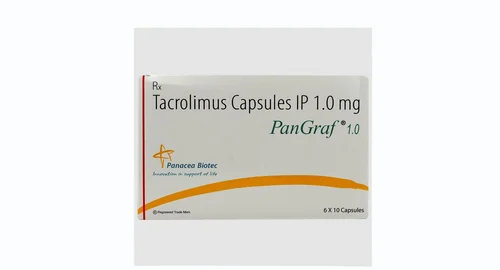
PANGRAF 1 MG https://oncomshealthcare.com/how-panagraf-0-5-mg-helps-prevent-organ-rejection/capsule is a prescription immunosuppressant medicine containing tacrolimus (1mg). it stops the body from rejecting a new organ like a kidney, liver or heart after a transplant by lowering one immune system activity. The amount one take on the type of transplant one have, one body weight and what other medicines one are taking.
WHAT IS PANGRAF 1 MG CAPSULES?
PANGRAF 1 mg capsule contains tacrolimus and is classified as an immunosuppressant . more specifically, it belongs to the subclass of calcineurin inhibitors .
Key classification:
- Salt content: Tacrolimus IP (1mg)
- Drug class: calcineurin inhibitor /immunosuppressant
- Primary uses: preventing rejection of transplanted organs by suppressing the body’s immune response
- Calcineurin inhibitor: PANGRAF 1mg capsule contains tacrolimus, a potent calcineurin inhibitor (CNI) . its core importance lies in suppressing the immune system T-lymphocytes to prevent rejection after organ transplant . As a CNI, it blocks calcineurin, halting the chemical signals needed to attack the donor organ.
- Mechanism of action: it binds to cellular protein to inhibit calcineurin phosphatase activity. It stops white blood cells from activating and multiplying. It also lowers production of chemical messengers that drive inflammation and immune attacks.
WHAT ARE THE MEDICAL USES OF PANGRAF 1 MG CAPSULES?
Medical uses of PANGRAF 1mg capsules are:
1)KIDNEY TRANSPLANTATION
PANGRAF 1mg capsule contains tacrolimus , animmunosuppressant drug used to prevent the body from rejecting a new kidney. It works by lowering ones immune system’s activity . Doctors prescribe it as a long-term therapy following a renal transplant. It blocks an enzyme called calcineurin, stopping white blood cells from activating and attacking the donor kidney.
- Prevention of acute and chronic rejection
PANGRAF 1mg prevents both acute and chronic rejection in kidney transplant patients by inhibiting calcineurin, which suppresses T-lymphocytes activation and stops the immune system from attacking the new organ. It is always used alongside other anti-rejection medicines.
- Long –term maintenance therapy
PANGRAF 1mg capsule contains tacrolimus, a calcineurin inhibitor used as a primary immunosuppressant for the long-term maintenance therapy of kidney transplant recipients to prevent acute and chronic allograft rejection. It functions by suppressing T-lymphocytes activation and interleukin-2 synthesis.
2)LIVER TRANSPLANT
PANGRAF 1mg is an immunosuppressant medication used to prevent body from rejecting a newly transplanted liver. It works by suppressing the immune system’s T-cells so they do not attack the new liver. Dosing must be strictly monitored through blood test by the transplanted specialist.
- Prevent of graft rejection
PANGRAF 1mg slowing down the immune system so it does not attack the new organ. It blocks a key enzyme called calcineurin to stop white blood cells from activating. It also reduces the immune system ability to recogonize the new tissue as a foreign object.
- Support for long-term transplant success
PANGRAF 1mg supports the immune system from attacking the new liver. Taking it regularly helps the body accept the new organ and supports long-term health after a transplant. It works by blocking an enzyme named calcineurin. It also slows down T-cell growth. It lowers immune response to protect the new liver.
3)HEART TRANSPLANT
PANGRAF 1mg stops one’s body from rejecting a new heart after a heart transplant. It works by llowering the immune system strengthen so it does not attack the new donor heart.
- Prevention of organ rejection
PANGRAF 1mg is an immunosuppressant drug used alongside other medications to prevent the body from rejecting a . It works by claiming the immune system so it does not attack the new organ. It must be prescribed and monitored closely by a transplant specialist. It stops the immune systems white blood cells from activating against donor heart. It also helps the new heart survive and function normally in the body.
- Used as a part of combination immunosuppressive therapy
PANGRAF 1mg is standardly used as part of combination immunosuppressive therapy to prevent rejection after kidney, liver or heart transplants. It works by suppressing T-lymphocyte activation to help the body accept the transplanted organ. It act as primary immunosuppressant to block T-cell activation and lower the body’s immune response against the donar organ. It is combined with other anti-rejection agents to maximize success rates while minimizing high individual drug toxicities.
HOW PANGRAF 1MG CAPSULES WORK?
PANGRAF 1 mg contains tacrolimus , which is an immunosuppressant medicine. It prevents the body from rejecting a new organ after a transplant operation . it works by slowing down the immune system so it does not attack the new organ.
It works by the following ways:
- Mechanism of action of Tacrolimus
Tacrolimus is a potent calcineurin inhibitor that suppresses the immune system by binding to the intracellular protein FKBP12. This drug –protein complex blocks the dephosphorylation and nuclear translocation of NAFT, which ultimately stops the transcription of interleukin -2 and other key cytokines needed for T –cells activation.
- Inhibition of calcineurin activity
PANGRAF is a powerful immunosuppressant drug that inhibits calcineurin activity by binding to the intacelluar protein FKBP-12 . This drug protein complex calcineurin phosphatase activity ,preventing T-cell activation, cytokine production and organ transplant rejection. It binds to FK506-binding protein 12 (FKBP-12) inside immune cells. The resulting complex attaches to calcineurin and stops its normal phosphatese activity. Without active calcineurin, the nuclear factor of activated T-cells cannot transform or move.
- Suppression of T-lymphocyte activation
PANGRAF suppresses T-lymphocyte activation by binding to an intracellular protein and inhibiting the enzyme calcineurin. This blocks prevents the transcription of interleukin -2 and other vital cytokinesis , stopping T-cells from growing , multiplying and launching an immune attack against a transplanted organ.
CONCLUSION
PANGRAF 1mg is a vital immunosuppressant medication used to prevent organ rejection after kidney, liver or heart transplant. It requires strict medical supervision, consistent dosing on an empty stomach, and routine blood monitoring due to significant risks like infection , high blood pressure , and kidney toxicity. It prevents rejection of transplanted organs and also suppresses the immune system by inhibiting calcineurin and T-cell activation.
FREQUENTLY ASKED QUESTIONS (FAQs):
QUESTION: WHAT IS PANGRAF 1 MG USED FOR?
PANGRAF 1 mg contains tacrolimus and is immunosuppressant medicine used alongside other medications to prevent the body from rejecting a newly transplanted organ such as kidney, liver or heart. It works by lowering the immune system activity so it does not attack the new organ. ‘
QUESTION: HOW DOES TRACOLIMUS PREVENT ORGAN REJECTION?
TRACOLIMUS prevents organ rejection by acting as an immunosuppressant drug that inhibits calcineurin, a protein needed to activate white blood cells called T-cells. By blocking T-cells growth , proliferation and intrleukin –2 production , it stops the immune system from attacking a transplanted organ.
QUESTION: CAN PANGRAF 1 MG BE TAKEN WITH FOOD?
PANGRAF 1mg is best taken on an empty stomach , typically 1 hour before or 2 to 3 hours after a meal, for maximum absorbtion .
REFRENCES:1)https://www.apothecare.in/products/pangraf-1mg-capsule
2)https://www.planethealth.in/pangraf-1-mg-cap-pack10